Motivation
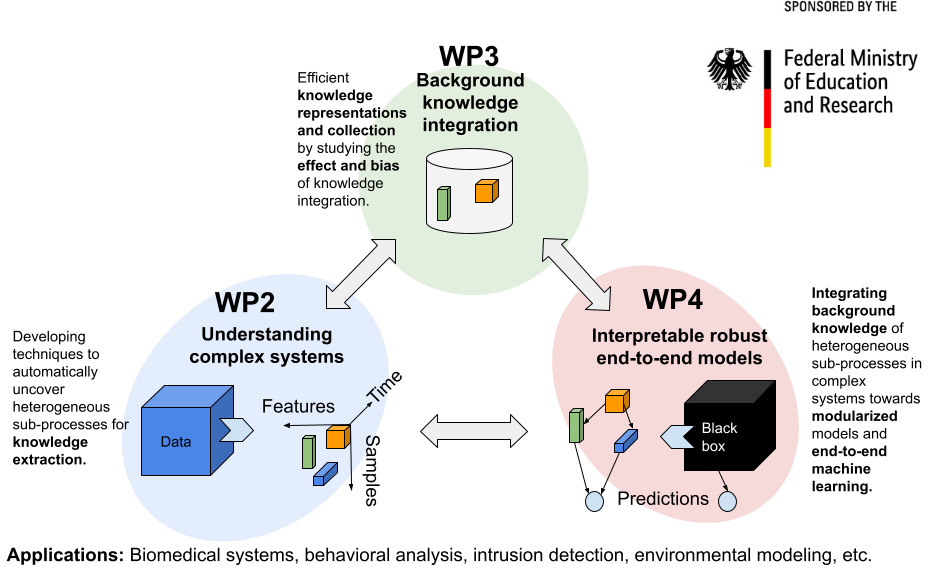
Complex systems are ubiquitous, whether in environmental processes, human behavior or biomedical applications. Understanding the underlying processes of such systems better and being able to make adequate predictions is a major challenge. Machine learning methods and in particular deep learning models deal with this mainly by relying on huge amounts of data. This often leads to models that are difficult to understand and from which it is not easily possible to gain deeper insights into the corresponding domain. At the same time, background knowledge and a deeper understanding of complex systems are essential for practical decision-making and planning. This highlights the central role of background knowledge, whose integration with machine learning has the potential to enable explanatory as well as predictive models with significantly increased predictive power, robustness, generalizability and fairness.
Goals and approach
Therefore, the AI junior research group Themis deals with knowledge extraction and knowledge integration for machine learning. The project aims to develop knowledge extraction methods to explain and understand complex systems along three axes: horizontal (interactions between components of the system), vertical (differences in the collected data, such as for different groups of people), and temporal (over time). Furthermore, the limits and the potential of knowledge integration in practical applications are examined and optimized. The methods developed are to be tested in case studies and projects with users.
Innovation und perspectives
The methods developed will thus form the basis for gaining new insights in a wide variety of application scenarios and optimally using existing knowledge for comprehensible machine learning. In the medium term, this should enable the practical application of knowledge-based machine learning in a variety of industries such as environmental modelling, behavioral analysis or biomedical development.
Publications
-
Zero-Shot Test-Time Canonicalization Using Out-of-Distribution Scoring
Dominik Lindner, Johann Schmidt, Tom Siegl, and 2 more authors
In Machine Learning and Knowledge Discovery in Databases. Research Track, Sep 2026
Pretrained vision models often misclassify inputs that are rotated, scaled, or sheared, even though these affine transformations leave the object class unchanged. Robustness is usually restored either by building equivariance into the architecture or by retraining with augmentation, both of which require changing or retraining the model. Test-time canonicalization instead leaves the classifier untouched. It undoes the transformation of each input, mapping it to a canonical form near the training distribution before classification. Existing canonicalizers, however, rely on a narrow set of logit-based energy scores and bespoke search procedures, leaving the design space of scoring functions and optimizers unexplored. We reframe canonicalization as out-of-distribution (OOD) detection, which lets any OOD score serve as the energy minimized over transformations. Across benchmarks ranging from handwritten characters and sketches to natural images and 3D point clouds, we systematically evaluate around twenty OOD scores and nine search algorithms, finding that distance-based scores paired with random search and local refinement perform best overall. Because canonicalizing an already-aligned input can hurt accuracy, we add a gated mechanism that transforms an input only when its OOD score indicates this is needed, preserving most in-distribution accuracy while retaining the robustness gains on transformed inputs. Code is available at https://github.com/johschm/its.
-
Geometrically Constrained and Token-Based Probabilistic Spatial Transformers
Johann Schmidt, Tom Siegl, Martin Becker, and 1 more author
In 2nd International Workshop on Biomedical Image and Signal Computing for Unbiasedness, Interpretability, and Trustworthiness, Sep 2026
Spatial transformations such as rotation and scale obscure the morphological cues needed for accurate image classification. Careful consideration is required for reliable use in high stakes settings. A model should stay robust under such transformations, expose why a correction was applied, and signal when its input is ambiguous. While geometrically equivariant architectures provide a mathematically grounded solution, they often limit model flexibility through strict symmetry constraints and incur significant computational overhead. Spatial Transformer Networks (STNs) offer a data-driven, flexible alternative for learning pseudo-equivariances to affine transformations. However, STNs have historically been restricted to convolutional architectures and suffer from training instability. To address this, we introduce a novel STN framework. It leverages the global modeling capabilities of transformers to regress the affine transformation acting on the input. For this, we decompose affine transformations into interpretable primitives, regressed under adaptable geometric constraints, thereby preventing the training instability typically caused by degenerate transformations. By sharing weights between the localization network and the classification backbone, the framework requires minimal computational overhead. Extensive experiments on challenging insect biodiversity and medical imaging benchmarks demonstrate that our approach achieves superior predictive performance under diverse spatial transformations while maintaining high efficiency. Code is available at https://github.com/johSchm/TokenSTN.
-
CytoBERT: A Foundation Model for Cytometry Data
Syed Abdul Haseeb Qadri, Bjarne C. Hiller, Felix Blanke, and 7 more authors
Aug 2026
arXiv:2608.14414 [cs.LG]
Cytometry measures the complex characteristics of single cells (e.g., counts and protein expression of immune cells) and is widely used across immunological research and clinical settings. However, cytometry data is highly heterogeneous and unstandardized due to experimental protocols and the choice of measured features. While machine learning methods hold the potential to gain deeper insights into cell biology, these challenges make them difficult to apply and transfer across studies. Recent advances in foundation models can alleviate these issues, but corresponding approaches are still scarce in this field. To address this, we provide CytoBERT, a publicly available, open-source, open-weight foundation model for single-cell cytometry data with variable marker panels. CytoBERT is pretrained in a self-supervised manner on a large-scale cytometry corpus (15 human datasets with heterogeneous marker panels and more than 50 million cells) curated through marker standardization, enabling it to learn transferable inter-marker relationships within cells. Fine-tuning CytoBERT for sample-level classification demonstrates that transfer learning across heterogeneous cytometry datasets is feasible, providing a starting point for scalable, generalizable cytometry analysis. Code is available on GitHub
-
Network-based disruption analysis of biological coordination
Martin Becker, Dorien Feyaerts, Ina Annelies Stelzer, and 23 more authors
Patterns, Jul 2026
-
Machine learning–guided multimodal profiling defines perturbed immune states at the time of cancer diagnosis
Peggy Berlin, Amin Mirzaei, Felix Steinbeck, and 22 more authors
Briefings in Bioinformatics, May 2026
Altered immune states at the time of cancer diagnosis remain insufficiently characterized. Although circulating immune biomarkers offer a promising, non-invasive way of analysing systemic tumour–host interactions, their potential remains poorly defined. Here, we present an integrated multi-omics analysis of peripheral blood mononuclear cells from treatment-naïve cancer patients, minimizing confounding by therapy-induced immune changes, combining immune phenotyping (flow cytometry, FC), multiplex cytokine profiling, and single-cell RNA sequencing (scRNA-seq). Compared with healthy donors, patients exhibited widespread immune dysregulation, including expansion of FOXP3+ regulatory T cells, depletion of CD16+CD11b+ monocytes and CD56^dim^ Natural killer (NK) cells, and elevated plasma IL-6 and IL-4 levels. scRNA-seq identified cancer-associated immune signatures, notably consistent upregulation of THBS1 and CH25H, indicative of systemic imprinting by tumour-derived cues. We further developed machine learning-guided models integrating single-cell multi-omics data (sc-FC and scRNA-seq) to characterize cancer-associated immune patterning and cancer type–related signal structure, while providing biologically interpretable feature attribution across modalities. The models achieved robust classification performance within the cohort and revealed modality-spanning features linked to immune state alterations.Together, these findings establish a framework for immune-based, multi-omics profiling of peripheral blood and provide a resource for discovering circulating cancer-associated immune signatures. This supports future development of immune-based diagnostics and disease monitoring approaches.
-
When Does Causal Background Knowledge Help Few-Shot Tabular Learning?
Kutalmış Coşkun, Felix Blanke, Vanja Sophie Cangalovic, and 5 more authors
2026
In preparation
-
-
Evolving Markov Chains: Online Mode Discovery and Recognition from Data Streams
Kutalmış Coşkun, Borahan Tümer, Bjarne C. Hiller, and 1 more author
IEEE Transactions on Pattern Analysis and Machine Intelligence, 2026
Markov chains are simple yet powerful mathematical structures to model temporally dependent processes. They generally assume stationary data, i.e., fixed transition probabilities between observations/states. However, live, real-world processes, like in the context of activity tracking, biological time series, or industrial monitoring, often switch behavior over time. Such behavior switches can be modeled as transitions between higher-level modes (e.g., running, walking, etc.). Yet all modes are usually not previously known, often exhibit vastly differing transition probabilities, and can switch unpredictably. Thus, to track behavior changes of live, real-world processes, this study proposes an online and efficient method to construct Evolving Markov chains (EMCs). EMCs adaptively track transition probabilities, automatically discover modes, and detect mode switches in an online manner. In contrast to previous work, EMCs are of arbitrary order, the proposed update scheme does not rely on tracking windows, only updates the relevant region of the probability tensor, and enjoys geometric convergence of the expected estimates. Our evaluation of synthetic data and real-world applications on human activity recognition, electric motor condition monitoring, and eye-state recognition from electroencephalography (EEG) measurements illustrates the versatility of the approach and points to the potential of EMCs to efficiently track, model, and understand live, real-world processes.
-
SPACEc: a streamlined, interactive Python workflow for multiplexed image processing and analysis
Yuqi Tan, Tim N. Kempchen, Martin Becker, and 11 more authors
Nature Communications, Nov 2025
Multiplexed imaging has transformed our ability to study tissue organization by capturing thousands of cells and molecules in their native context. However, these datasets are enormous, often comprising tens of gigabytes per image, and require complex workflows that limit their broader use. Current tools are often fragmented, inefficient, and difficult to adopt across disciplines. Here we show that SPACEc, a scalable Python platform, streamlines spatial imaging analysis from start to finish. The platform integrates image processing, cell segmentation, and data preprocessing into a single workflow, while improving computational performance through parallelization and GPU acceleration. We introduce innovative methods, including patch proximity analysis, to more accurately map local cellular neighborhoods and interactions. SPACEc also simplifies advanced approaches such as deep-learning annotation, making them accessible through an intuitive interface. By combining efficiency, accuracy, and usability, this platform enables researchers from diverse backgrounds to gain deeper insights into tissue architecture and cellular microenvironments.
-
-
Electroencephalogram features support the retrogenesis hypothesis of Alzheimer’s disease: Exploratory comparison of brain changes in aging and childhood
João Areias Saraiva, Martin Becker, Martin Dyrba, and 8 more authors
Journal of Alzheimer’s Disease, Aug 2025
BackgroundThe retrogenesis hypothesis (RH) suggests that the functional and cognitive decline observed in Alzheimer’s disease dementia mirrors in reverse order the brain development during childhood and adolescence.ObjectiveEquivalent electroencephalogram (EEG) patterns between older adults across different cognitive decline stages and children across different brain maturation stages were directly compared.MethodsTo capture the complex patterns that allow for such a comparison, a regression model was trained on EEG data from N = 510 older adults, at different stages of cognitive reserve, to identify EEG markers predictive of global cognitive status. The model was then applied on the same EEG markers of N = 696 children across different ages.ResultsThe model predicted MMSE scores with an average error of 2.53 and R2 of 0.80. When applied to children, predictions correlated positively with age (r = 0.73). Key predictors of cognitive function concordant in both populations were theta coherence (right frontal-left temporal/parietal), temporal Hjorth complexity, and beta edge frequency, supporting the RH.ConclusionsThese EEG features were inversely associated between older adults and children, supporting a functional underpinning of the retrogenesis model of dementia. Clinical validation of these biomarkers could favor their use in the continuous monitoring of cognitive function.
-
SubROC: AUC-Based Discovery of Exceptional Subgroup Performance for Binary Classifiers
Tom Siegl, Kutalmış Coşkun, Bjarne C. Hiller, and 3 more authors
In ECAI 2025, 2025
Machine learning (ML) is increasingly employed in real-world applications like medicine or economics, thus, potentially affecting large populations. However, ML models often do not perform homogeneously, leading to underperformance or, conversely, unusually high performance in certain subgroups (e.g., sex=female {}wedge marital}_status=married). Identifying such subgroups can support practical decisions on which subpopulation a model is safe to deploy or where more training data is required. However, an efficient and coherent framework for effective search is missing. Consequently, we introduce }emph{SubROC}, an open-source, easy-to-use framework based on Exceptional Model Mining for reliably and efficiently finding strengths and weaknesses of classification models in the form of interpretable population subgroups. SubROC incorporates common evaluation measures (ROC and PR AUC), efficient search space pruning for fast exhaustive subgroup search, control for class imbalance, adjustment for redundant patterns, and significance testing. We illustrate the practical benefits of SubROC in case studies as well as in comparative analyses across multiple datasets.
-
Evaluating the Fidelity of Explanations for Convolutional Neural Networks in Alzheimer’s Disease Detection
Bjarne C. Hiller, Sebastian Bader, Devesh Singh, and 3 more authors
In Bildverarbeitung für die Medizin 2025, 2025
-
Mode of delivery predicts postpartum maternal leukocyte telomere length
Danielle M. Panelli, Jonathan A. Mayo, Ronald J. Wong, and 11 more authors
European Journal of Obstetrics & Gynecology and Reproductive Biology, Sep 2024
Background Recent studies have suggested that pregnancy accelerates biologic aging, yet little is known about how biomarkers of aging are affected by events during the peripartum period. Given that immune shifts are known to occur following surgery, we explored the relation between mode of delivery and postpartum maternal leukocyte telomere length (LTL), a marker of biologic aging. Study design Postpartum maternal blood samples were obtained from a prospective cohort of term, singleton livebirths without hypertensive disorders or peripartum infections between 2012 and 2018. The primary outcome was postpartum LTLs from one blood sample drawn between postpartum week 1 and up to 6 months postpartum, measured from thawed frozen peripheral blood mononuclear cells using quantitative PCR in basepairs (bp). Multivariable linear regression models compared LTLs between vaginal versus cesarean births, adjusting for age, body mass index, and nulliparity as potential confounders. Analyses were conducted in two mutually exclusive groups: those with LTL measured postpartum week 1 and those measured up to 6 months postpartum. Secondarily, we compared multiomics by mode of delivery using machine-learning methods to evaluate whether other biologic changes occurred following cesarean. These included transcriptomics, metabolomics, microbiomics, immunomics, and proteomics (serum and plasma). Results Of 67 included people, 50 (74.6 %) had vaginal and 17 (25.4 %) had cesarean births. LTLs were significantly shorter after cesarean in postpartum week 1 (5755.2 bp cesarean versus 6267.8 bp vaginal, p = 0.01) as well as in the later draws (5586.6 versus 5945.6 bp, p = 0.04). After adjusting for confounders, these differences persisted in both week 1 (adjusted beta −496.1, 95 % confidence interval [CI] −891.1, −101.1, p = 0.01) and beyond (adjusted beta −396.8; 95 % CI −727.2, −66.4. p = 0.02). Among the 15 participants who also had complete postpartum multiomics data available, there were predictive signatures of vaginal versus cesarean births in transcriptomics (cell-free [cf]RNA), metabolomics, microbiomics, and proteomics that did not persist after false discovery correction. Conclusion Maternal LTLs in postpartum week 1 were nearly 500 bp shorter following cesarean. This difference persisted several weeks postpartum, even though other markers of inflammation had normalized. Mode of delivery should be considered in any analyses of postpartum LTLs and further investigation into this phenomenon is warranted.
-
Association of pregnancy complications and postpartum maternal leukocyte telomeres in two diverse cohorts: a nested case-control study
Danielle M. Panelli, Xiaobin Wang, Jonathan Mayo, and 9 more authors
BMC Pregnancy and Childbirth, Jul 2024
Biologic strain such as oxidative stress has been associated with short leukocyte telomere length (LTL), as well as with preeclampsia and spontaneous preterm birth, yet little is known about their relationships with each other. We investigated associations of postpartum maternal LTL with preeclampsia and spontaneous preterm birth.
-
Computational Approaches for Connecting Maternal Stress to Preterm Birth
Amin Mirzaei, Bjarne C. Hiller, Ina A. Stelzer, and 3 more authors
Clinics in Perinatology, Jun 2024
-
CompTrails: comparing hypotheses across behavioral networks
Tobias Koopmann, Martin Becker, Florian Lemmerich, and 1 more author
Data Mining and Knowledge Discovery, May 2024
The term Behavioral Networks describes networks that contain relational information on human behavior. This ranges from social networks that contain friendships or cooperations between individuals, to navigational networks that contain geographical or web navigation, and many more. Understanding the forces driving behavior within these networks can be beneficial to improving the underlying network, for example, by generating new hyperlinks on websites, or by proposing new connections and friends on social networks. Previous approaches considered different hypotheses on a single network and evaluated which hypothesis fits best. These hypotheses can represent human intuition and expert opinions or be based on previous insights. In this work, we extend these approaches to enable the comparison of a single hypothesis between multiple networks. We unveil several issues of naive approaches that potentially impact comparisons and lead to undesired results. Based on these findings, we propose a framework with five flexible components that allow addressing specific analysis goals tailored to the application scenario. We show the benefits and limits of our approach by applying it to synthetic data and several real-world datasets, including web navigation, bibliometric navigation, and geographic navigation. Our work supports practitioners and researchers with the aim of understanding similarities and differences in human behavior between environments.
-
Multimodal machine learning for modeling infant head circumference, mothers’ milk composition, and their shared environment
Martin Becker, Kelsey Fehr, Stephanie Goguen, and 15 more authors
Scientific Reports, Feb 2024
Links between human milk (HM) and infant development are poorly understood and often focus on individual HM components. Here we apply multi-modal predictive machine learning to study HM and head circumference (a proxy for brain development) among 1022 mother-infant dyads of the CHILD Cohort. We integrated HM data (19 oligosaccharides, 28 fatty acids, 3 hormones, 28 chemokines) with maternal and infant demographic, health, dietary and home environment data. Head circumference was significantly predictable at 3 and 12 months. Two of the most associated features were HM n3-polyunsaturated fatty acid C22:6n3 (docosahexaenoic acid, DHA; p = 9.6e−05) and maternal intake of fish (p = 4.1e−03), a key dietary source of DHA with established relationships to brain function. Thus, using a systems biology approach, we identified meaningful relationships between HM and brain development, which validates our statistical approach, gives credence to the novel associations we observed, and sets the foundation for further research with additional cohorts and HM analytes.
-
Large-scale correlation network construction for unraveling the coordination of complex biological systems
Martin Becker, Huda Nassar, Camilo Espinosa, and 27 more authors
Nature Computational Science, Apr 2023
Advanced measurement and data storage technologies have enabled high-dimensional profiling of complex biological systems. For this, modern multiomics studies regularly produce datasets with hundreds of thousands of measurements per sample, enabling a new era of precision medicine. Correlation analysis is an important first step to gain deeper insights into the coordination and underlying processes of such complex systems. However, the construction of large correlation networks in modern high-dimensional datasets remains a major computational challenge owing to rapidly growing runtime and memory requirements. Here we address this challenge by introducing CorALS (Correlation Analysis of Large-scale (biological) Systems), an open-source framework for the construction and analysis of large-scale parametric as well as non-parametric correlation networks for high-dimensional biological data. It features off-the-shelf algorithms suitable for both personal and high-performance computers, enabling workflows and downstream analysis approaches. We illustrate the broad scope and potential of CorALS by exploring perspectives on complex biological processes in large-scale multiomics and single-cell studies.
-
Revealing the impact of lifestyle stressors on the risk of adverse pregnancy outcomes with multitask machine learning
Martin Becker, Jennifer Dai, Alan L. Chang, and 29 more authors
Frontiers in Pediatrics, Dec 2022
Psychosocial and stress-related factors (PSFs), defined as internal or external stimuli that induce biological changes, are potentially modifiable factors and accessible targets for interventions that are associated with adverse pregnancy outcomes (APOs). Although individual APOs haven been shown to be connected to PSFs, they are biologically interconnected, relatively infrequent, and therefore challenging to model. In this context, multi-task machine learning (MML) is an ideal tool for exploring the interconnectedness of APOs and at the same time building on joint combinatorial outcomes to increase predictive power. Additionally, by integrating single-cell immunological profiling of underlying biological processes, the effects of stress-based therapeutics may be measurable, facilitating the development of precision medicine approaches.The primary objectives were to jointly model multiple APOs and their connection to stress early in pregnancy, and to explore the underlying biology to guide development of accessible and measurable interventions.In a prospective cohort study, PSFs were assessed during the first trimester with an extensive self-filled questionnaire for 200 women. We used MML to simultaneously model and predict APOs (severe preeclampsia, superimposed preeclampsia, gestational diabetes and early gestational age) as well as several risk factors (BMI, diabetes, hypertension) for these patients based on PSFs. Strongly interrelated stressors were categorized to identify potential therapeutic targets. Furthermore, for a subset of 14 women, we modeled the connection between PSFs, the maternal immune system, and APOs by building ML models based on an extensive single cell immune dataset (mass cytometry time of flight, i.e., CyTOF).Jointly modeling APOs in a MML setting significantly increased modeling capabilities and yielded a highly predictive integrated model of APOs underscoring their interconnectedness. Most APOs were associated with mental health, life stress, and perceived health risks. Biologically, stressors were associated with immune characteristics revolving around CD4/CD8 T cells. Immune characteristics predicted from stress were in turn found to associate with APOs. Elucidating connections among stress, multiple APOs simultaneously, and immune characteristics has the potential to facilitate the implementation of ML-based, individualized, integrative models of pregnancy in clinical decision making. The modifiable nature of stressors may enable the development of accessible interventions, with success tracked through immune characteristics.